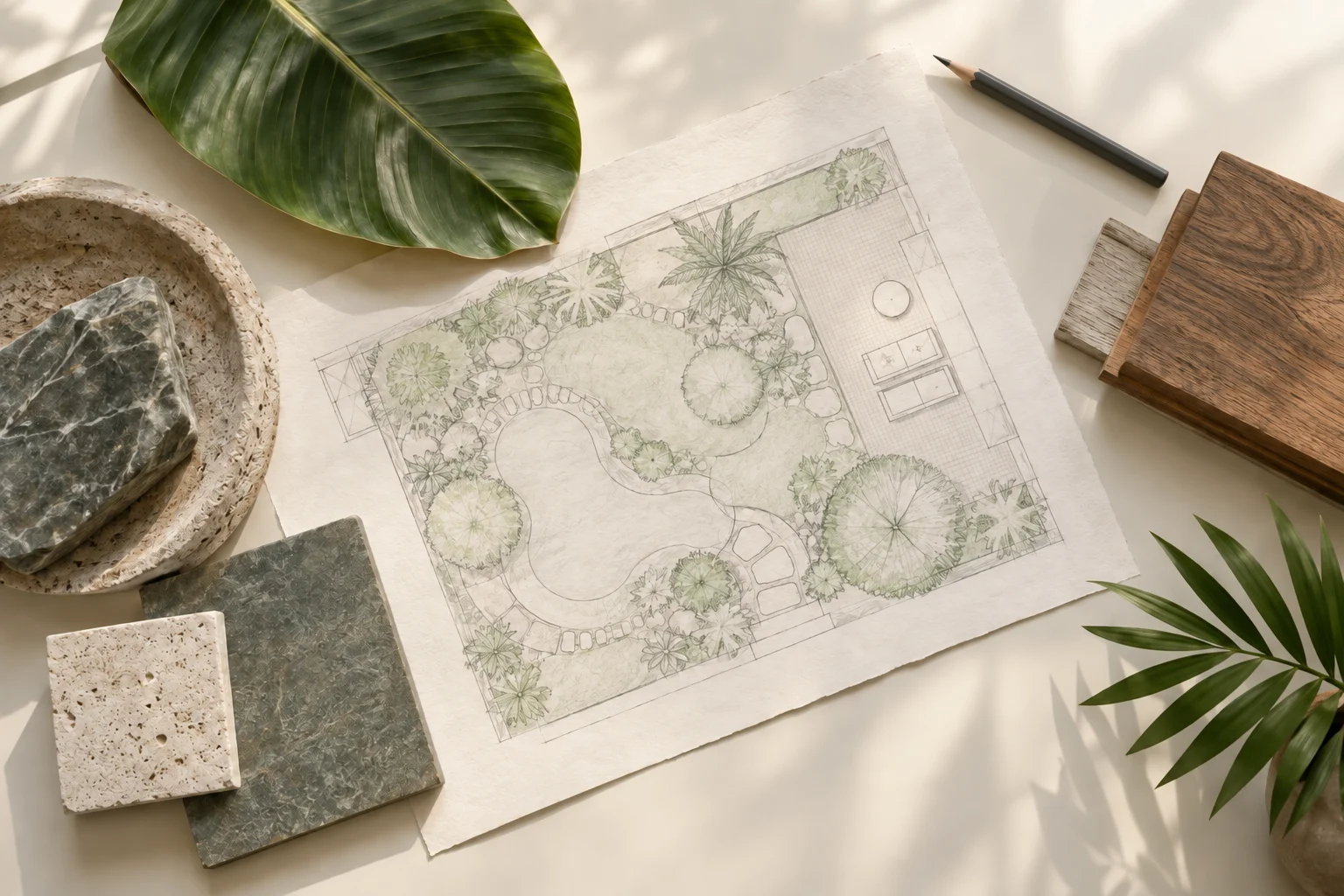
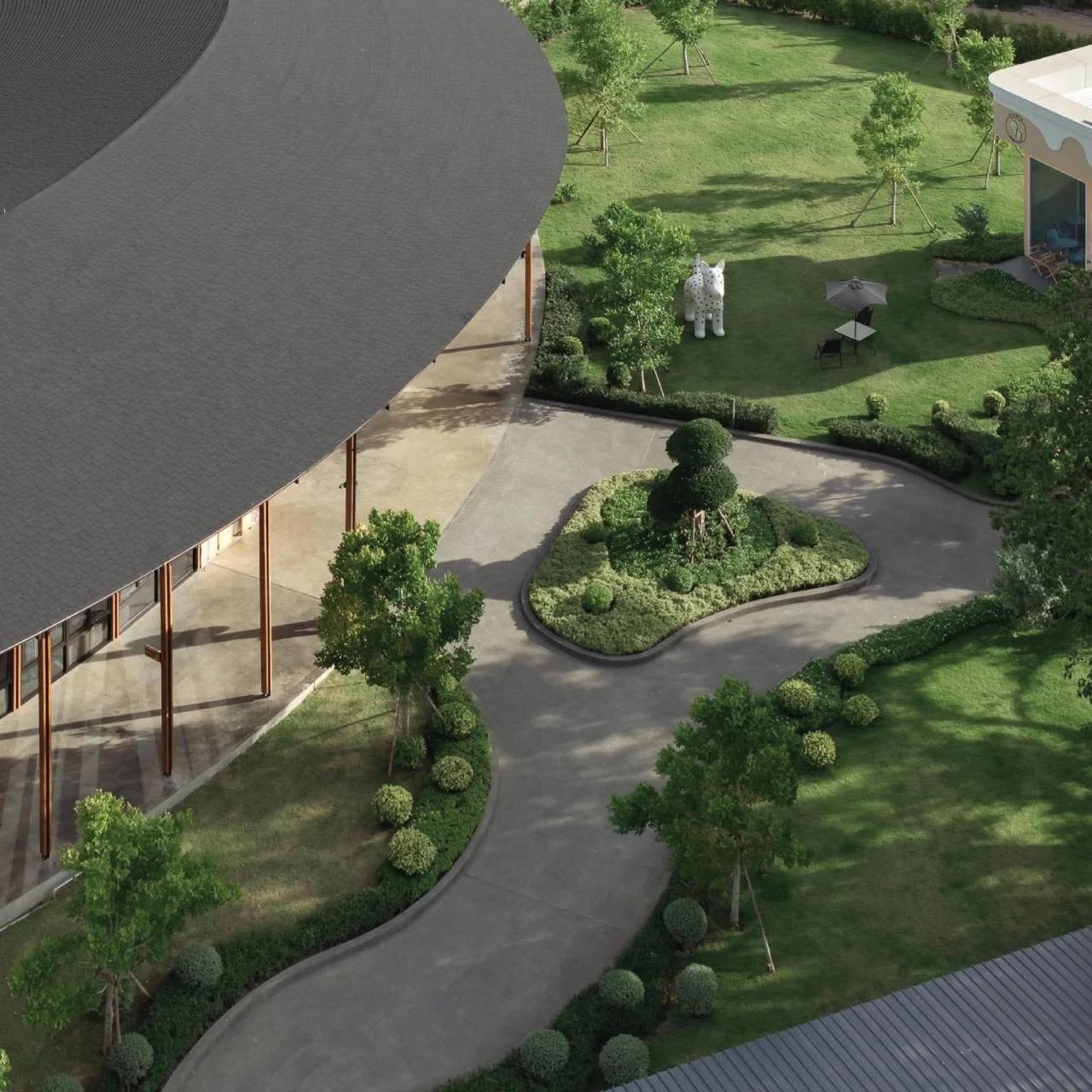
Start a narrow side yard with a path about 60–90 cm wide, use surfaces water can soak through such as gravel or open-jointed blocks, choose plants that stay small, raise planters where soil is limited and move water away from the house. For a gravel garden, medium angular gravel about 5 cm deep covers the soil well and is comfortable to walk on.
A side yard is more than a planting strip
Side yards are usually service routes — to air-conditioning units, meters, drains and bins. Some stretches take full afternoon sun, others barely see light, and many also take roof run-off. Before choosing plants, walk the space and note where people pass often, how many hours of sun each part gets and where rainwater flows.
Set the path first, then add the garden
Baan Lae Suan suggests keeping a path of at least about 60–90 cm so people can move comfortably; lean to the wider side if technicians carry equipment through. Permeable surfaces — gravel, open-jointed stone or grass blocks — handle rain better than solid concrete along the whole strip.
Gravel that keeps weeds down
- Use medium angular gravel — it locks together better than round pebbles and does not roll underfoot
- Lay it about 5 cm deep, as the RHS recommends — thinner shows soil, thicker is hard to walk on
- A landscape fabric under the gravel is optional; cut crosses only where you plant
- Set small plants on a low mound so the gravel does not bury them
- Expect some weeding in the first years until plants fill in
Pale gravel brightens a narrow passage, but in strong sun it can throw glare onto eyes and walls. Test a sample in real light before ordering the full amount.
Keep water moving away from the house
Moisture from planting soil and daily watering can build up against walls. Planters against a wall need waterproofing and drainage holes; never heap soil high against the house. Grade the ground so water heads to a drain or soakaway, and check that gutters do not empty into the middle of the path.
Choose plants by their mature size
In tight spaces choose plants that do not spread wide and whose roots will not lift paving or structures. Use ferns and shade-tolerant foliage in shaded stretches, and sun- and drought-tolerant plants where the sun is strong. Where soil is scarce, raised planters about 30 cm high for shrubs or about 60 cm for small trees give roots room and keep beds off the path. Trellises or shelves on bare walls add greenery vertically.
Checklist before you start
- How often people walk or carry things through
- Where AC units, meters, pipes or inspection pits need access
- How many hours of sun each stretch gets
- Where water sits after rain
Send photos of the side yard and rough dimensions in a brief, and the team will suggest whether to start with the path, drainage or planting. Start an online brief
Explore the sources
These principles inform the explanation; decisions should respond to actual site conditions.