Plan three parts: design fees, construction costs and an allowance for unresolved items. Design fees alone are not the total garden budget, and equally sized spaces can have different costs.
What does a design fee help clarify?
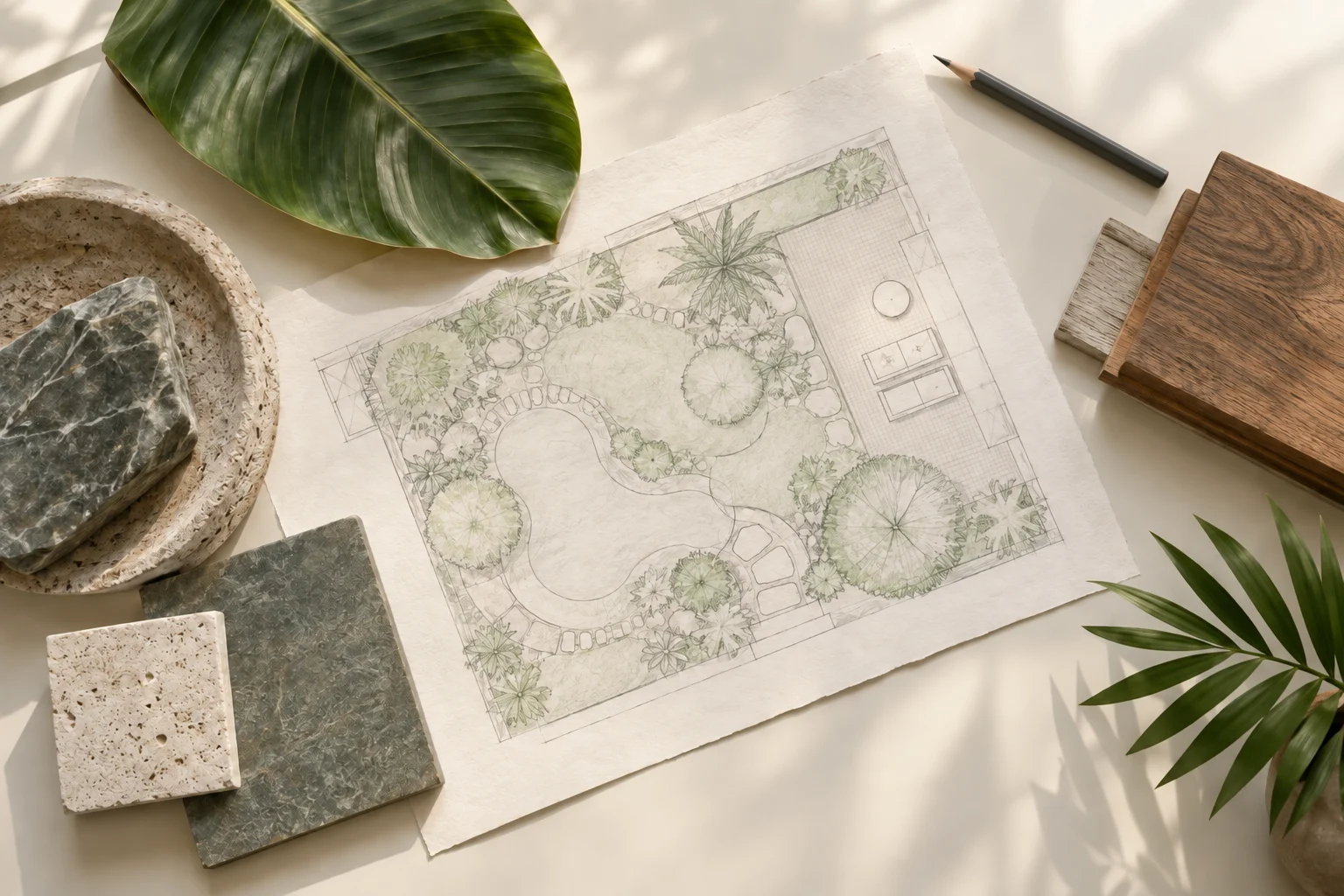
Before choosing plants or paving, we need to understand who uses the garden, when they use it, and what constraints exist. Design turns this into a layout, material direction, planting and agreed details. Presentation images help you decide, but they are not the only documents needed to build.
When comparing proposals, consider drawing detail, number of views, quantities, revisions and support after delivery together. A lower fee may cover a different scope, rather than the same work at a lower price.
See the budget for the whole project
| Budget component | What it covers | What to check in a proposal |
|---|---|---|
| Design | Develop the brief, layouts, views and details | Drawing list, number of views and revision rounds |
| Build | Materials, plants, labour, systems and site management | Quantities, specifications, delivery and exclusions |
| Contingency | Items awaiting information or concealed existing conditions | Agree an allowance and who authorises its use |
Do not automatically treat contingency as the contractor's income. Identify necessary items and approve them before work proceeds.
An example of a combined budget
For example, THB 60,000 for design plus THB 500,000 for specified construction gives a base budget of THB 560,000 before tax and exclusions. Add an owner's contingency of THB 50,000 and the planned funds are THB 610,000. The contingency is not an immediate payment to the contractor.
This example illustrates how budgets add together. It does not mean every garden can be built for this amount. Groundwork, existing levels, equipment access and systems needing changes must be assessed separately.
What should I reduce first if the budget is smaller?
Prioritise essential use, such as the route from your door and the seating you need. Then consider decorative elements that can wait. Plan service routes and connections ahead to avoid undoing newly completed work.
Phased work needs a clear overall plan and a defined scope for each stage. Avoid cutting essential groundwork or drainage simply to make the initial quotation look lower.
Before accepting a quotation
- Does the total include both design and construction?
- Do the specification and quantities match what was agreed?
- Are travel, demolition or specialists charged separately?
- Which work or deliverables does each payment cover?
- Must cost and schedule changes be approved before extra work begins?