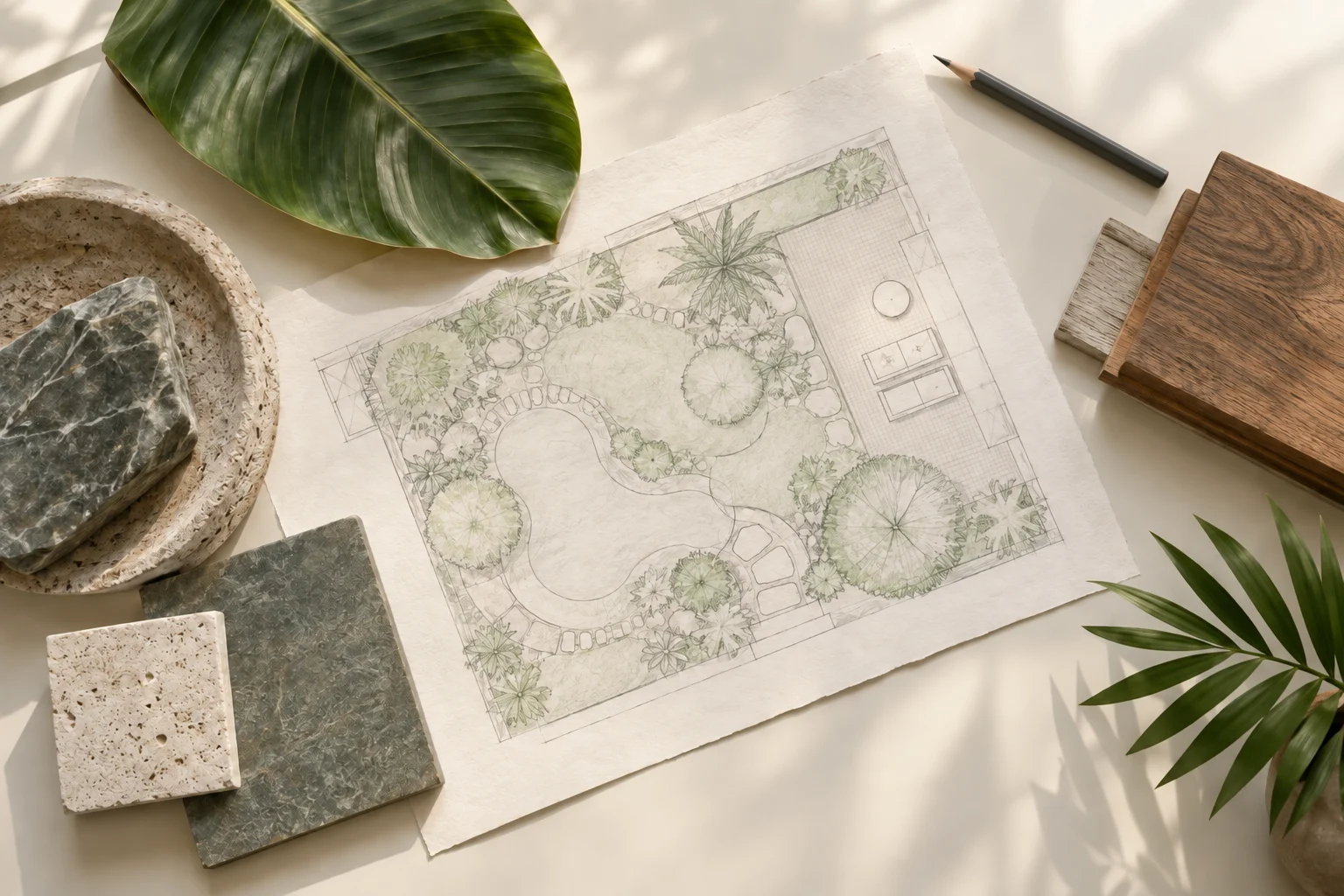
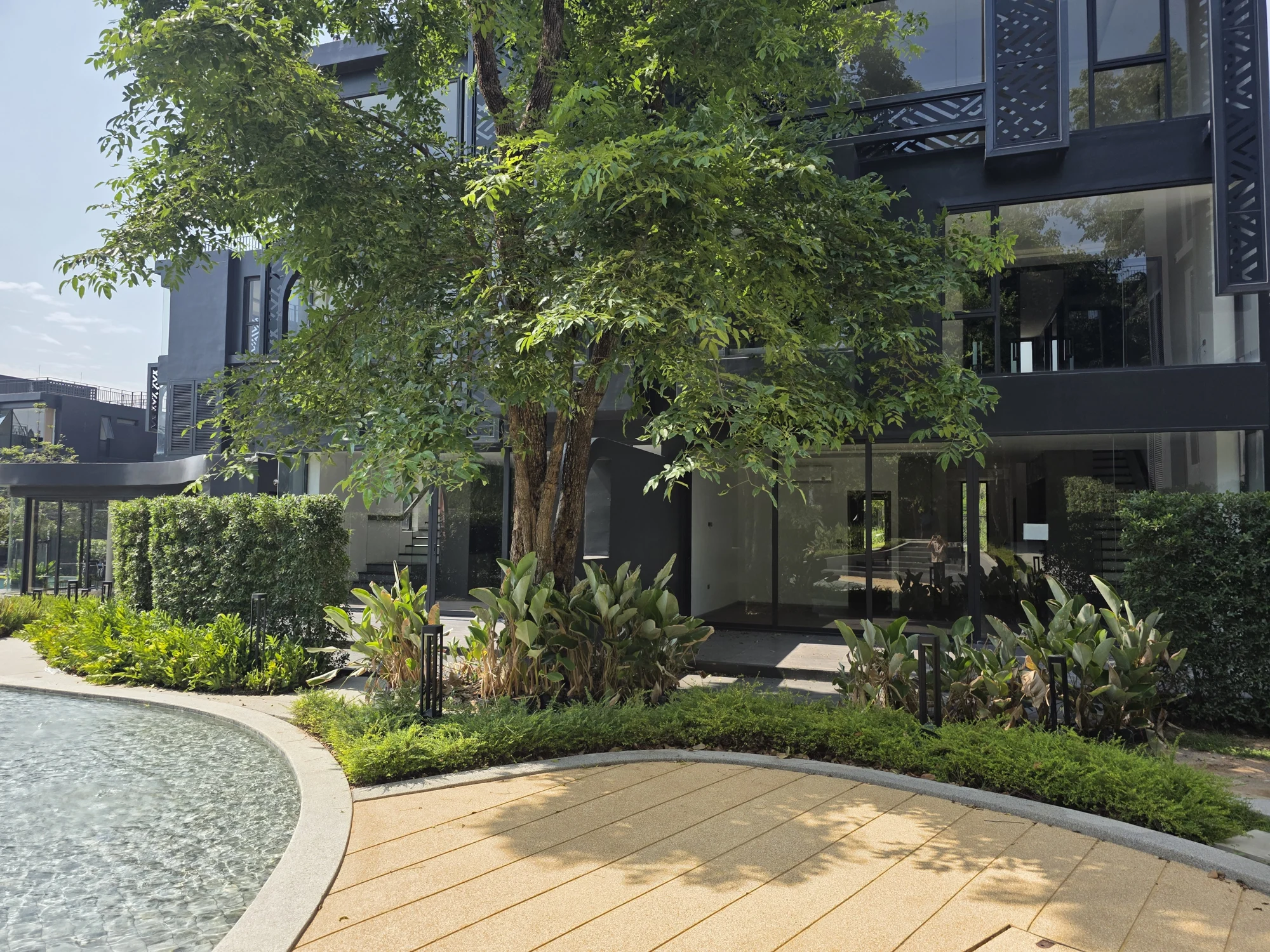
A low-maintenance front garden starts with plants matched to the sun and space, groups plants with similar water needs, uses mulch against weeds and evaporation, keeps lawn only where it is used, puts drip irrigation in beds and gives beds clear edges.
1. The right plant in the right place
The first Florida-Friendly Landscaping principle is Right Plant, Right Place. Plants suited to their sun and soil stay healthier and need less water, fertiliser and spraying — and choosing by mature size means you are not pruning constantly to keep them small.
2. Group plants by water needs
Keep thirsty plants near taps or the house and drought-tolerant plants on the outer edges. When a bed shares similar water needs, irrigation is simpler and you are not overwatering everything for the thirstiest plant.
3. Mulch every bed
A mulch layer about 5–7.5 cm deep, as UF/IFAS recommends, holds moisture, suppresses weeds and keeps beds tidy. Organic mulches also add nutrients as they break down; top up when the layer thins.
4. Lawn only where it is used
Lawns need regular mowing, watering and feeding. Where children or pets do not use it, beds of shrubs, ground covers or gravel cut routine work considerably.
5. Let irrigation do the work
UF/IFAS recommends micro-irrigation such as drip in planting beds, checked regularly for leaks and overspray. Timers help a great deal, but still watch the plants and turn watering down or off in the rainy season.
6. Clear edges and easy access
Defined bed edges — brick, stone or steel — stop grass creeping in and make trimming easy. Leave access to taps, valves and plants that need pruning, and agree at design stage who will look after the garden and how often. A garden designed around the care it will really get stays good for longer.
Tell us in the brief who will care for the garden and how much time they have, and the team will design around it. Start an online brief
Explore the sources
- UF/IFAS · Florida-Friendly Landscaping 9 Principles ↗
- UF/IFAS Gardening Solutions · Choosing and Installing Mulches ↗
These principles inform the explanation; decisions should respond to actual site conditions.