Tell us who uses the space, activities, site photos, approximate size, what to retain, your budget and intended start date. It is fine not to know everything; the team can help identify what needs checking.
Describe an ordinary day before choosing a style
Start with everyday routines: coffee before work, children playing after school, or using the garden more in the evening. Tell us how many people use it regularly and when guests visit. If someone needs help moving around, describe how they use the space so we can discuss the details.
Photograph the whole space and its connections
Take wide photographs from the house entrance and back towards the building. Include delivery access, known water and power points, and areas affected after rain. Add morning or afternoon photos where the light changes significantly, noting the time to help us understand the shadows.
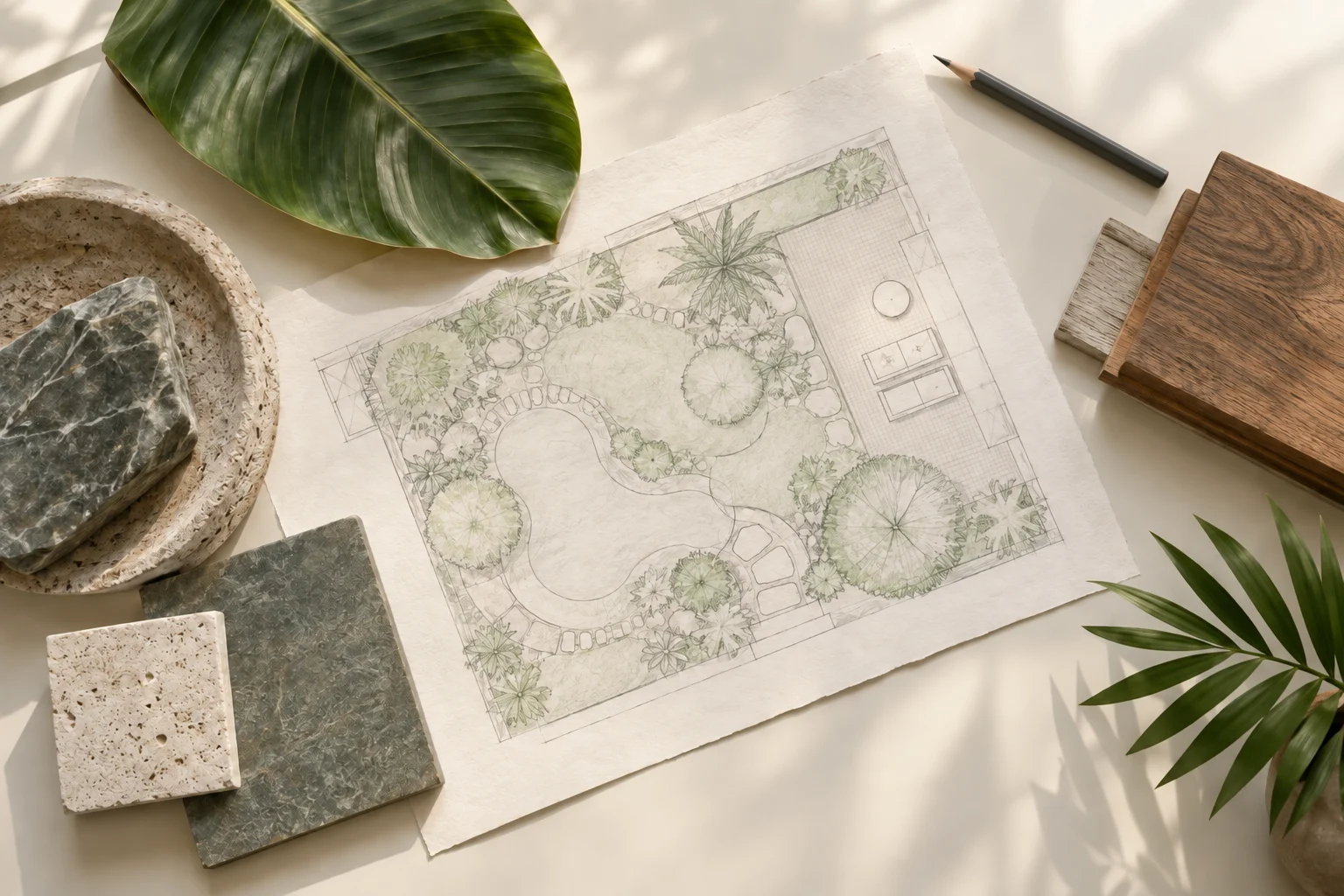
Share any existing plan with known dimensions. Approximate measurements are useful for an initial conversation, but working levels and boundaries must be verified. RHS guidance recommends a scale plan showing buildings, existing trees and fixed features before arranging the garden.
A one-page brief to share with the team
- People: who uses the garden, and how many at a time?
- Activities: what would you like to do, and when?
- Space: photos, plans, approximate dimensions and access
- What to keep: existing trees, materials or favourite corners
- Budget: design and construction, or let us know if you are unsure
- Timing: intended start, access conditions and flexibility
- Decisions: who gathers feedback and approves the design?
Explain what you like in reference images
One image may appeal for several reasons: shade, seating, stone textures or a sense of openness. Note what you like so the team can carry that feeling into your own space, even if the site is different. References do not have to match your home exactly.
You do not need every answer to start a conversation
Missing details should become questions to follow up, rather than reasons to guess figures or preferences. Start with our brief form and save a copy to discuss with the team. Once the brief is clear, we can define the scope and price.
Explore the sources
These principles inform the explanation; decisions should respond to actual site conditions.