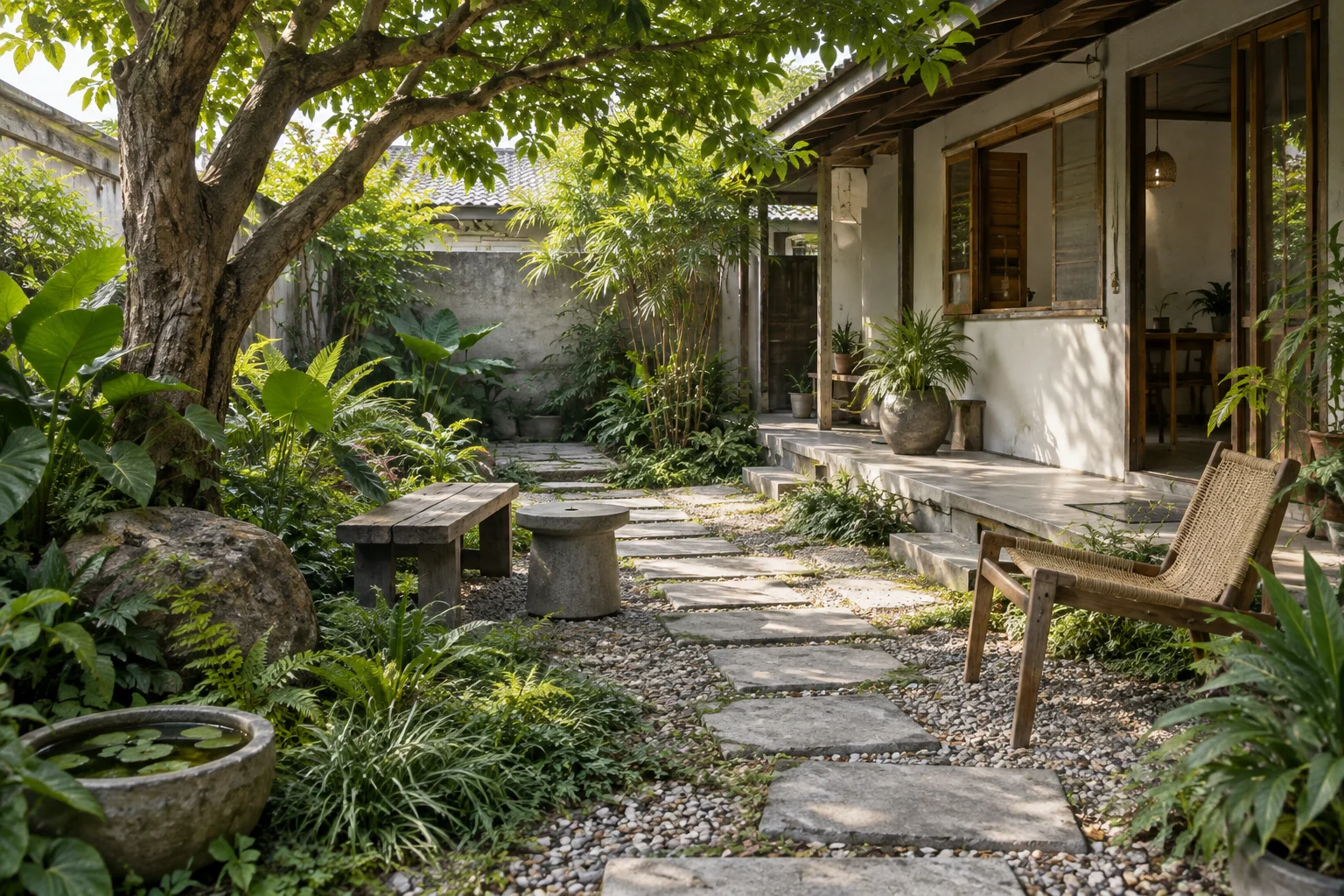
Choose one main activity, such as relaxing or dining, then make paths and shade work for it. Leave room for people and plants to grow instead of fitting every feature into a small garden.
Choose a clear main activity
A small garden does not need a waterfall, lawn, dining table and reading corner all at once. Choose what you will use most and let other elements support it. For relaxing after work, an accessible seat without glare may matter more than a lawn covering the entire space.
Try the layout before buying
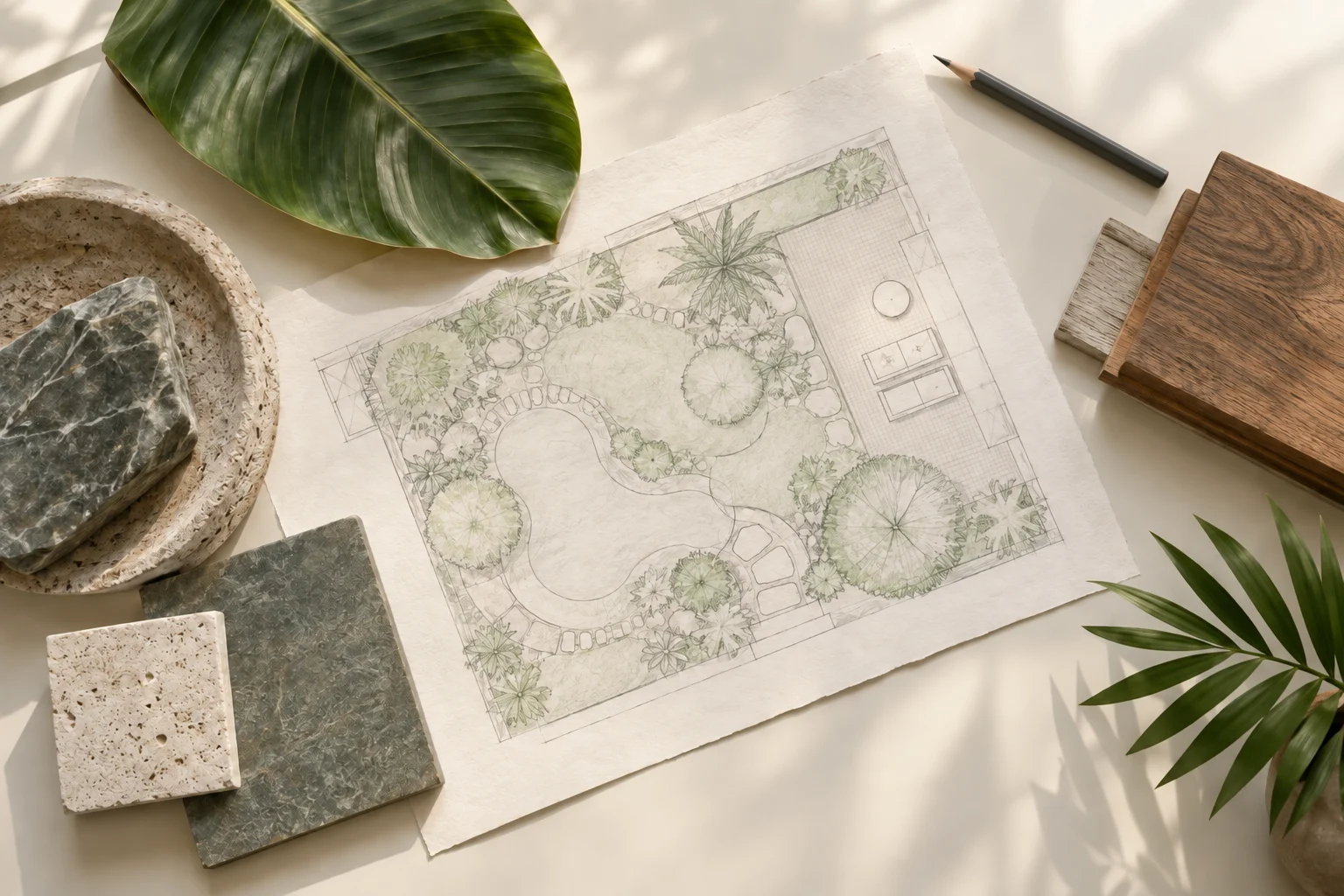
Use a simple plan or mark furniture positions on the ground, then try walking through, moving chairs and opening doors. Check that people can still pass when someone is seated. This reveals constraints an aerial view may miss, before you order materials.
Observe sunlight at the times you use the garden
Note when the seating area receives direct sun and whether existing buildings or trees already provide shade. Then choose where and how to add shade. A single photograph cannot establish the garden's light conditions throughout the day or across seasons.
Leave room for trees to grow
Discuss mature size, root space, pruning and maintenance access, rather than choosing only by the size at purchase. Plant selection needs an assessment of the site's light, soil, water and surroundings, including buildings and underground services.
Three questions before adding anything else
- Does this improve how you use the garden, or simply make the picture busier?
- Can you still move, maintain and clean comfortably?
- If the budget is limited, can this wait for a later phase?
Comfort can come from leaving space open. A restrained material palette and clear circulation help a small garden feel settled and remain practical to maintain.