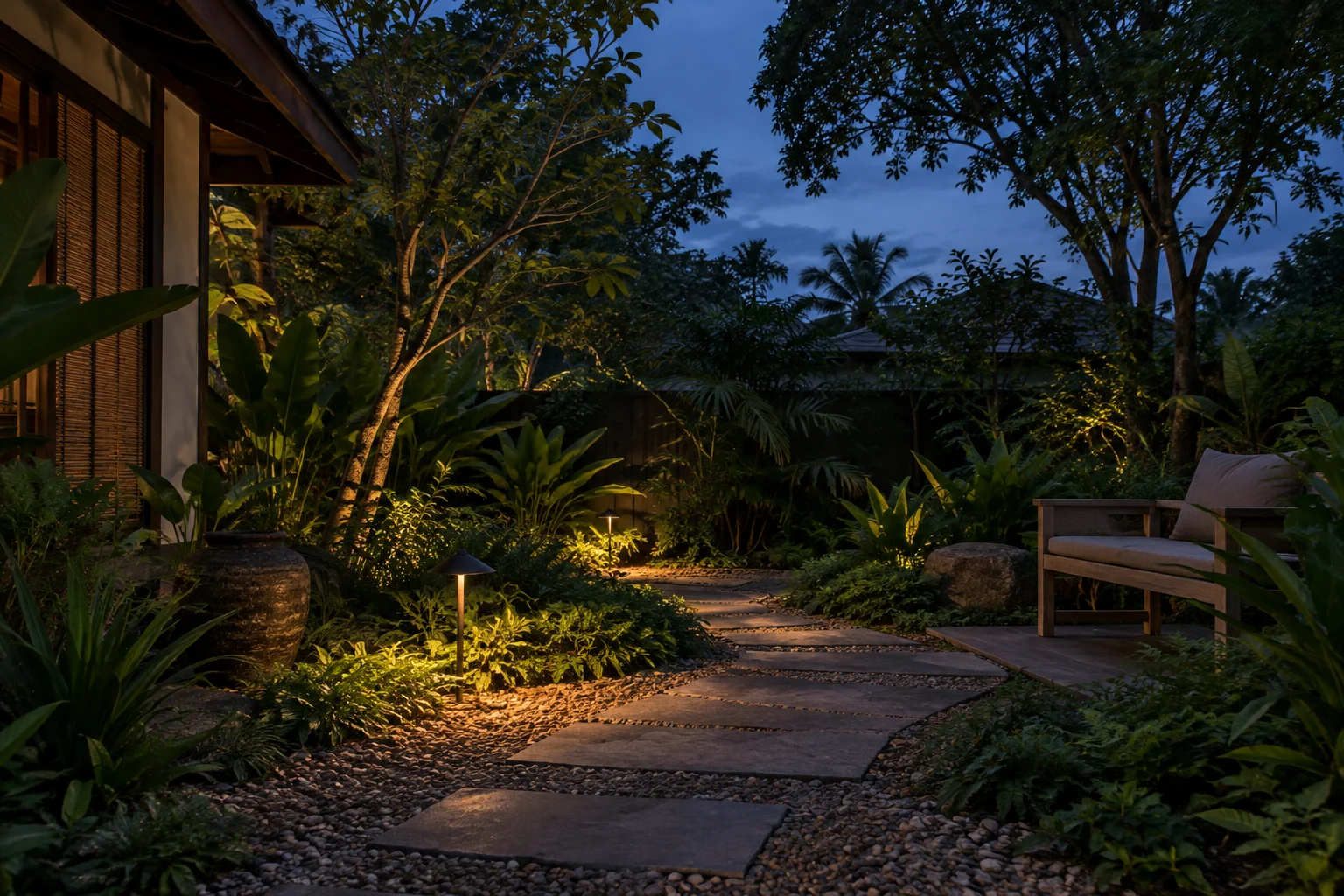
Begin with what needs to be visible, direct light where it is needed, use only the necessary amount and control operating times. Comfort for people sitting in the garden and for neighbours matters as much as its night-time appearance.
Walk the garden at the time you plan to use it
Before selecting fittings, walk from the house to your intended seating area. Note corners, steps, doors and obstructions. Sit where you will actually spend time and check whether light from the building or street causes glare. This makes it easier to discuss what the lighting needs to do.
Three purposes for garden light
| Purpose | Things to consider | What to watch for |
|---|---|---|
| See the way | Paths, entrances and changes in level | Fittings obstructing a path or light causing glare |
| For practical use | Tables, seating and food preparation areas | Brighter than the atmosphere needs |
| Create depth | Material textures, planting and backdrops | Light spilling into the sky or neighbouring homes |
Use light responsibly
DarkSky and IES principles start with useful, targeted, low-level, controlled and appropriately warm lighting. In a home garden, consider shielded path lights that keep the source out of seated eye lines, rather than lighting the whole space uniformly.
Atmosphere studies and systems drawings serve different purposes
Mood references and indicative fitting locations help discuss use. Outdoor equipment, circuits, connections and protection must be designed and checked by the responsible specialists for the actual site. Illustrations alone are not installation instructions.
Try the lighting before approving it
- Check the view from your seat and through the windows
- Check tree shadows and light spilling towards neighbours
- Try switching off lights or separating circuits by use
- Leave access to replace and maintain equipment
- Review again as trees grow or furniture moves
Explore the sources
These principles inform the explanation; decisions should respond to actual site conditions.